How to write a diary entry
To write a diary entry, put the date at the top, then three or four sentences: what happened, how you felt, and one thing for tomorrow. Five minutes is enough, and a short honest entry beats a long one you skip.
Updated 21 October 2026. Sources named on the page.
- A five minute format you can repeat
- Three short examples, one for a good day, a hard day and a plain day
- What to leave out, and what to do on a day you have nothing to say
- Free printable prompts to start from
Keep your results in the Daily Journal
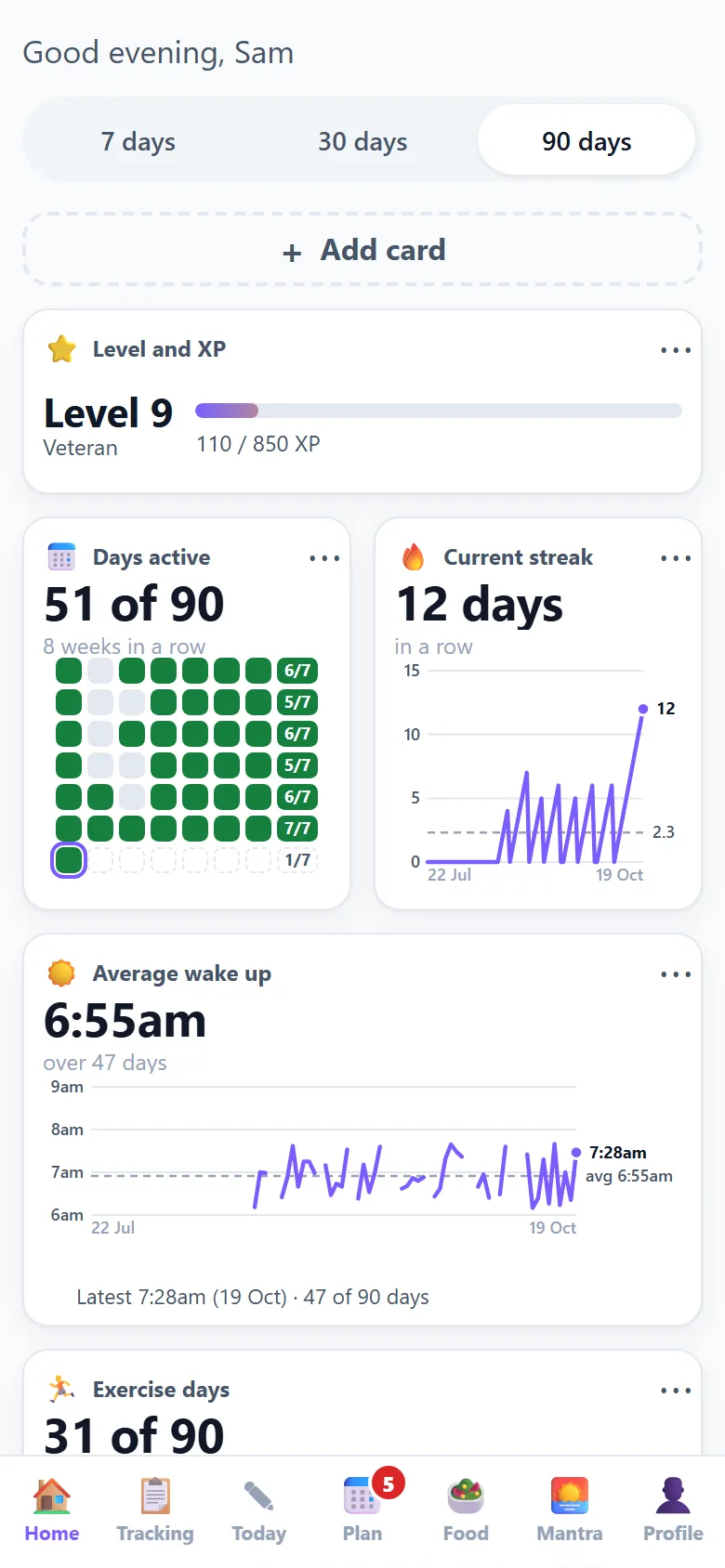
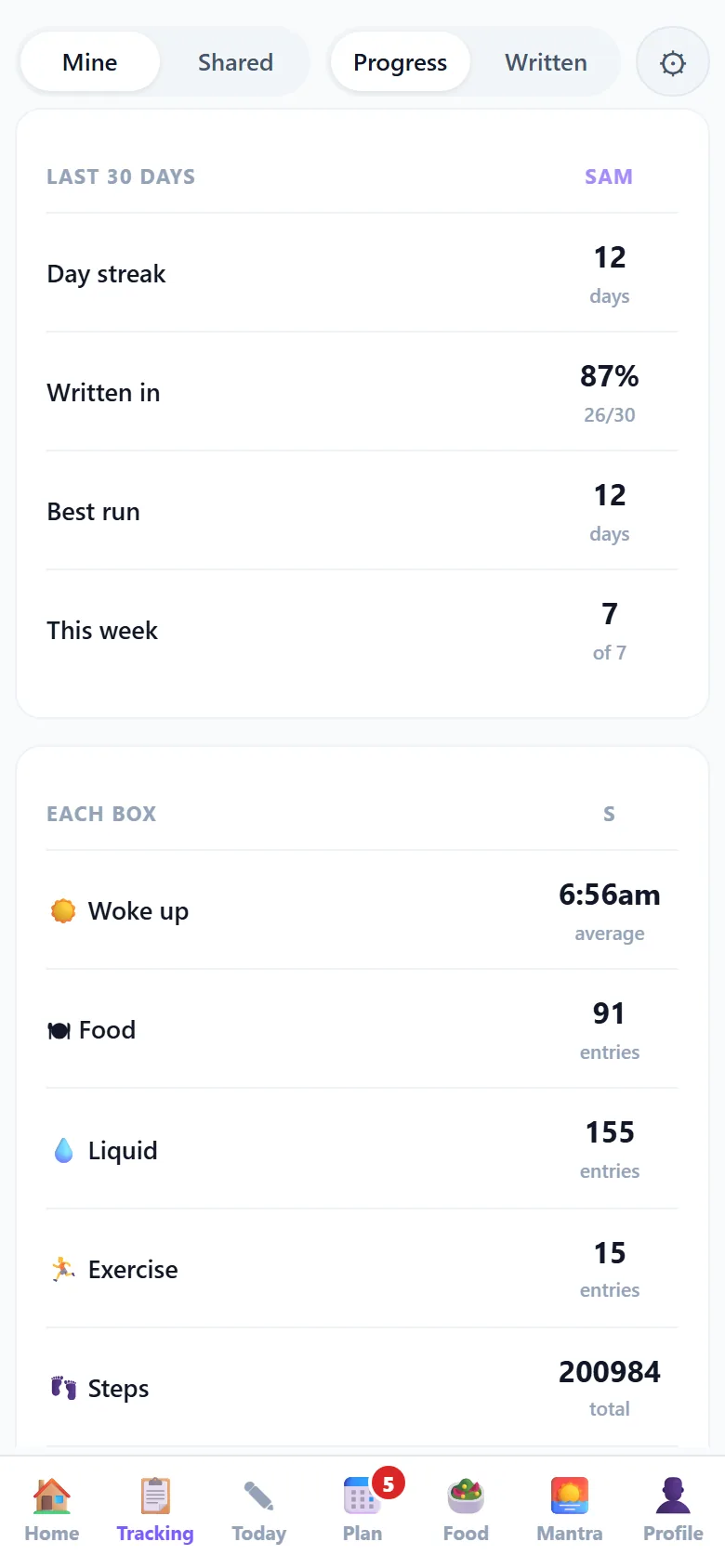
Habits, food, mood and sleep in one private place, with progress charts and a daily research card. Free to start.
- Every claim names its study
- Alone, as a couple or with a group
- Private by default
The five minute format
Write the date. Then one sentence on what happened, one on how you felt, and one on what you want to do tomorrow. Add a fourth sentence only if it is easy. The structure is there so you never face a blank page.
Example: a good day
"Friday 7 November. Finished the report and walked home instead of taking the tram. I felt light, and surprised how much the walk helped. Tomorrow: send the report and call Mum."
Example: a hard day
"Tuesday 4 November. The meeting went badly and I snapped at Sam afterwards. I felt ashamed and tired. Tomorrow: say sorry, and go to bed early."
Example: a plain day
"Wednesday 5 November. Nothing much: work, dinner, an episode of something. I felt flat but okay. Tomorrow: the usual, and a ten minute walk at lunch."
What to leave out
You do not need to write everything, or to write well, or to explain yourself to a future reader. Leave out anything you would rather not keep. A diary is for you, so it can be short, plain and unfinished.
When you have nothing to say
Use a prompt: what is one thing I am looking forward to, who am I grateful for, what made me laugh. A free page of thirty prompts is on this site, and writing one sentence still counts as a day.
Paper or app
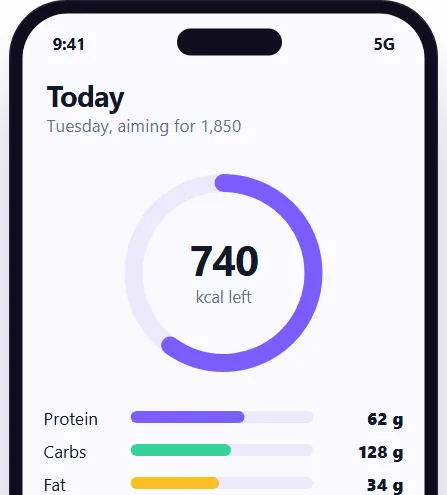
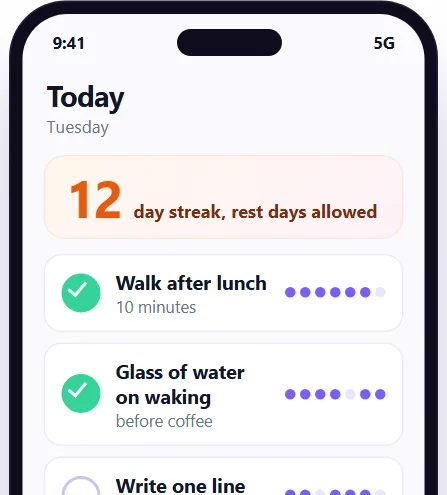
A notebook is simple and private. If you would like a reminder, a streak that allows rest days and a place for food, sleep and mood next to your entries, the Daily Journal does that and the first three habits are free.
Questions
How long should a diary entry be?
Three to five sentences is enough. Five minutes, or one short paragraph, written most days, is better than a long entry once a month.
What do I write in a diary if nothing happened?
Write what the day felt like, one small thing you noticed, and one thing for tomorrow. Or answer a single prompt.
Should I write in the morning or at night?
Whichever you will actually do. Night suits looking back on the day, morning suits setting an intention. Pair it with something you already do.
Is it okay to skip days?
Yes. Start again the next day without catching up. A diary with gaps is still a diary.
Keep going
Tools that go with this page
Each one shows an example screen, what the paid apps charge and what the Daily Journal does today.
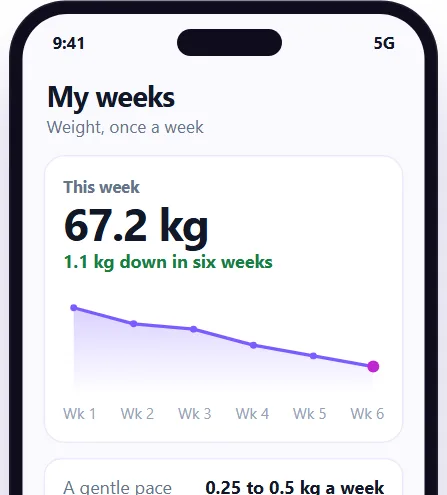 Weight loss journal
Keep your diary in a private journal
Sign up free for the Daily Journal: write a short entry each day, with a reminder and a streak that allows rest days. Private by default.