Mood diary
A mood diary is a short daily record of how you felt and what was going on around it. Write the date, a mark for your mood, and one or two lines on why. After a few weeks it shows what lifts you and what weighs on you.
Updated 21 October 2026. Sources named on the page.
- What a mood diary is and how it differs from a tracker
- A page layout you can copy
- What to write on a hard day
- Free to start in the Daily Journal
Keep your results in the Daily Journal
Habits, food, mood and sleep in one private place, with progress charts and a daily research card. Free to start.
- Every claim names its study
- Alone, as a couple or with a group
- Private by default
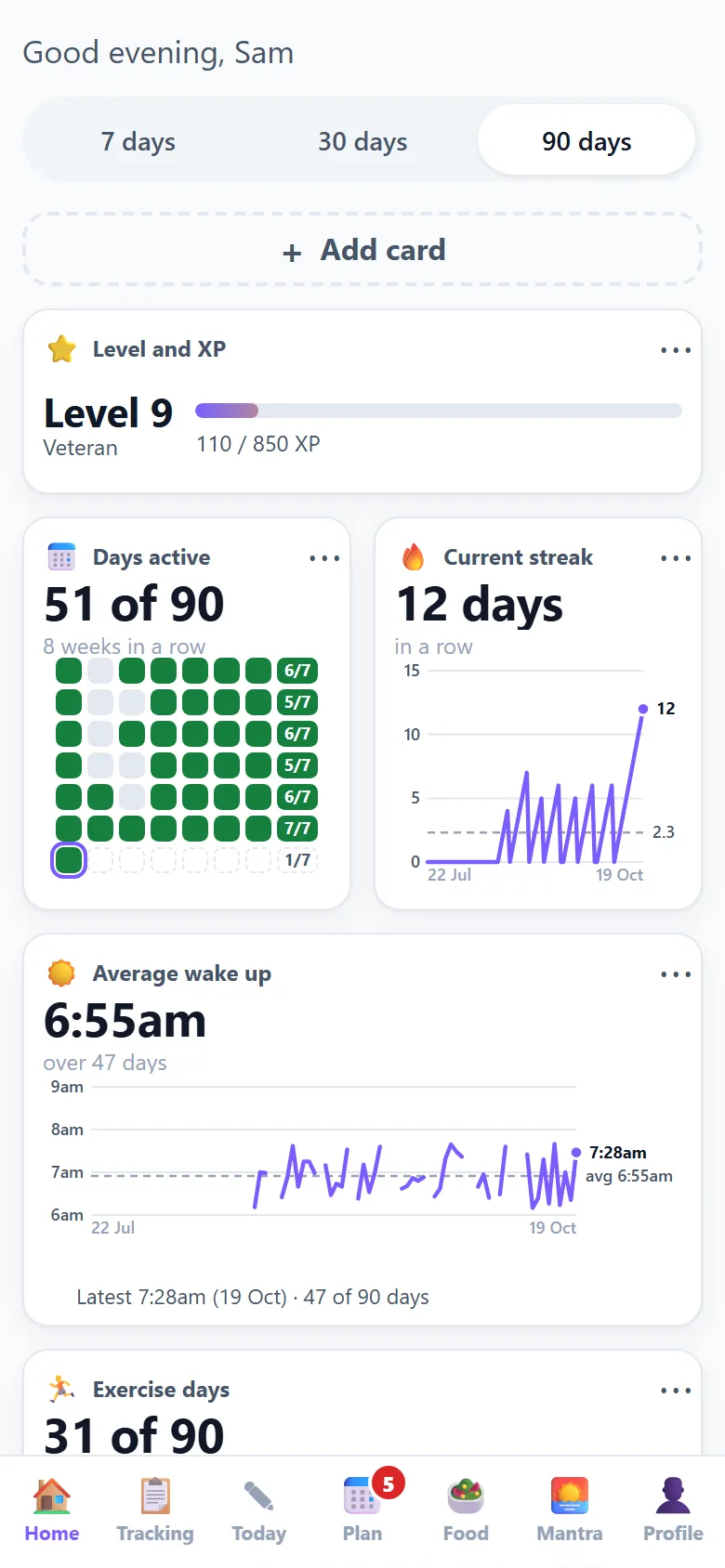
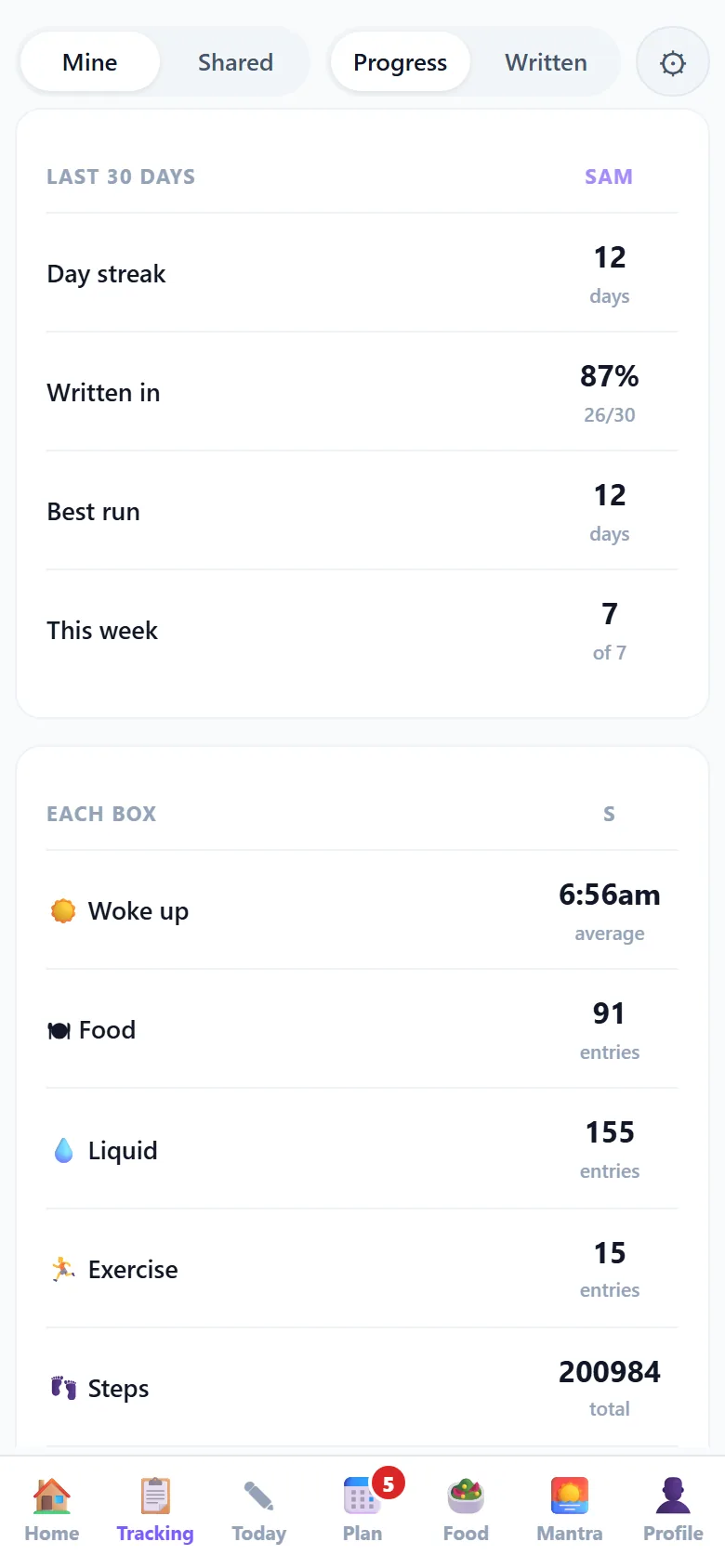
A diary is a tracker with words
A mood tracker is a mark. A mood diary adds a few words. The mark is quick, and the words are what turn the pattern into something you can use: not just that Tuesday was low, but that it followed a late night and a skipped lunch.
A page layout to copy
Write the date. Then four short lines: my mood (a word or a number), what happened, what I did about it, and one thing for tomorrow. Four lines take two or three minutes and give you something to read back.
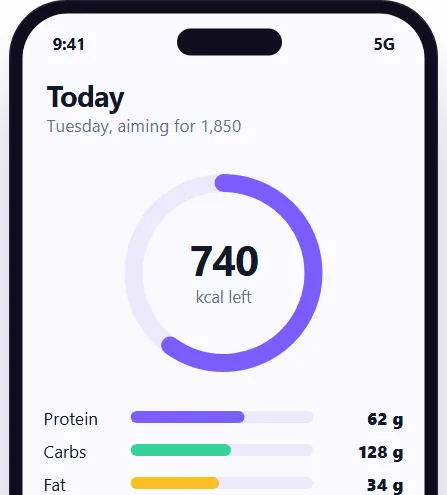
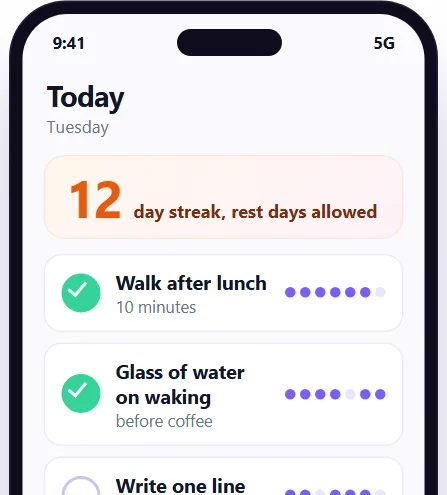
On a hard day
Keep it shorter, not longer. A mark and one line is a full entry. You are not writing to fix the day, only to record it honestly so that it is not forgotten when you look back.
Read it back, gently
Once a month, read the page. Look for what repeats and what helped, and write one change you will try. Be kind about it: a diary is evidence to learn from, not a record to be judged by.
Keep it private
A mood diary holds honest things. On paper, keep it somewhere safe. In an app, choose one that is private by default. The Daily Journal entries are private to you.
When a diary is not enough
A mood diary is not treatment. If your mood stays low for more than a couple of weeks, or you feel unsafe, speak to a doctor or a support service. Bring the diary if it helps.
Questions
What is a mood diary?
A daily record of your mood and a few words on why. It is a tracker with notes.
What do I write in a mood diary?
The date, a mood mark, what happened, what you did about it and one thing for tomorrow.
How is a mood diary different from a journal?
A mood diary focuses on how you felt each day. A journal can cover anything. Many people keep both on one page.
Is a mood diary private?
On paper, only as private as where you keep it. In an app, check the privacy settings. The Daily Journal is private by default.
Keep going
Tools that go with this page
Each one shows an example screen, what the paid apps charge and what the Daily Journal does today.
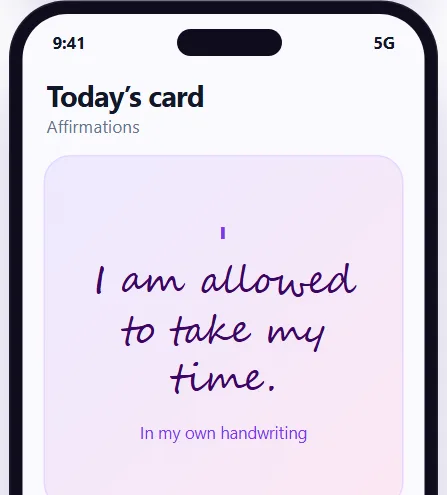 Affirmation app
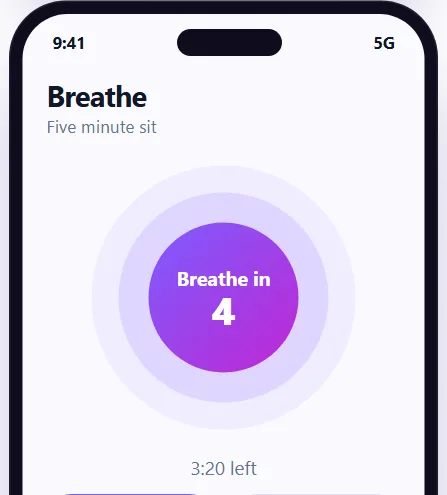 Meditation app
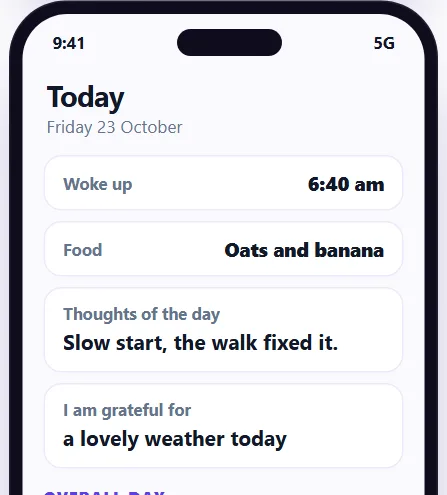 Journal app
Start a private journal: mood diary
Sign up free for the Daily Journal: a short entry a day, reminders, and habits, food, mood and sleep in one private place.